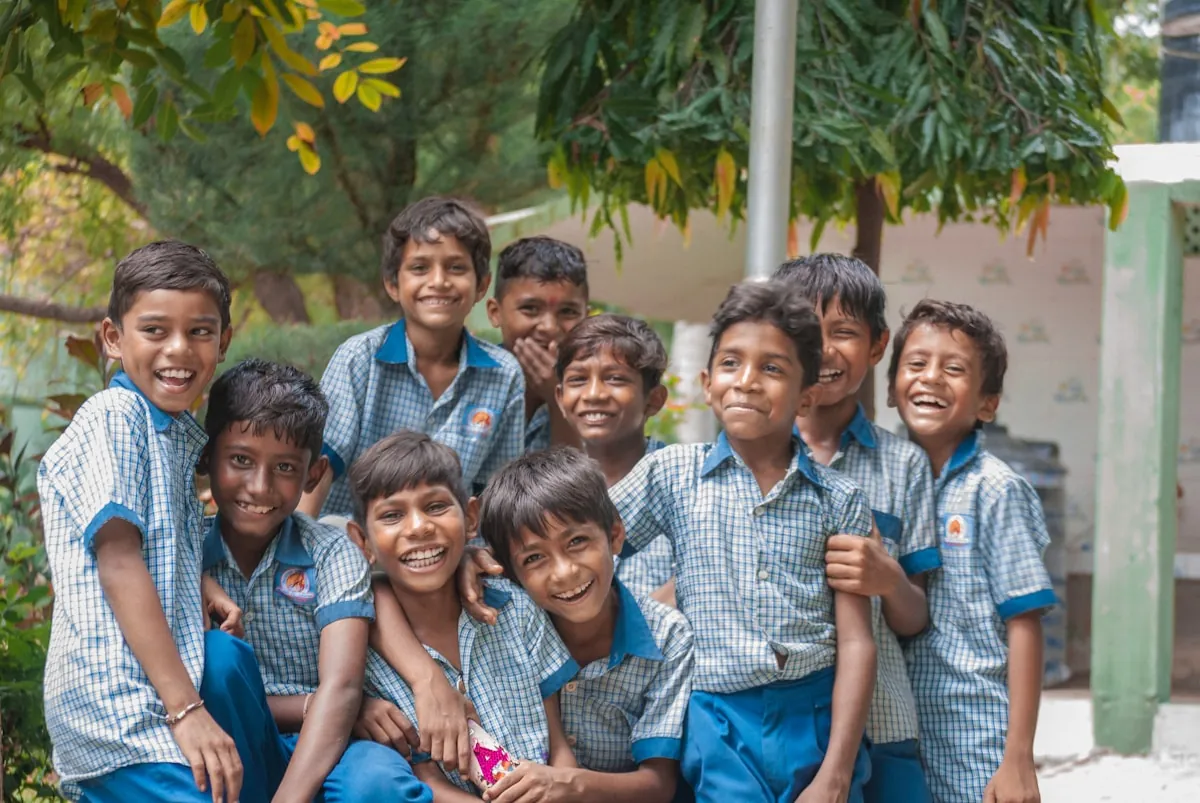
The school run looks different when you're new. Your child doesn't know which gate to enter, which teacher to find, or a single face in the crowd. You drop them off and drive away wondering whether you've made a terrible mistake.
Most parents with international school experience have stood in that exact spot. What they'll also tell you — almost universally — is that it gets better, usually faster than anyone expects, and that the kids who struggle most in September are often the ones who seem most at home by December.
But "it gets better" isn't a strategy. Here's what actually helps.
The Emotional Arc: What to Expect and When
Child psychologists who work with internationally mobile families describe a consistent pattern that's useful to know in advance, because if you're watching for it, you can respond to it rather than panic about it.
The honeymoon phase typically lasts one to three weeks. Everything is novel and stimulating. Your child comes home with stories about the food in the canteen, the funny accents, the different way they do assemblies. Energy is high. This is real — don't dismiss it — but it's also borrowed time before the nervous system catches up.
The dip hits somewhere between week three and month three. The novelty wears off and the hard work of belonging begins. Loneliness surfaces. There may be complaints about the school, the teachers, the other kids, the country. Some children go quiet; others become clingy or irritable at home. Younger children often regress — bedwetting, thumb-sucking, sleep problems. Older children may retreat into screens or communicate through mood swings.
This phase is normal. It is not a sign that you chose the wrong school or made the wrong move.
Recovery comes as routines solidify and the first genuine friendships form. It's rarely a clean upswing — it's more like two steps forward, one step back, until one day you notice your child is talking about "my friend Soren" or "my friend Priya" in the present tense rather than in memories of old classmates.
Knowing this arc doesn't make the dip painless. But it stops you from catastrophizing, which is the most useful thing a parent can do during the hard weeks.
The First Week: Small Things That Matter
The logistics of the first week sound boring but they compound. Every small source of friction — not knowing where the bathrooms are, not understanding the lunch system, not knowing what to do at break — costs a child cognitive and emotional energy that would otherwise go toward connection.
Walk the school before day one if you can. Most international schools will accommodate a brief familiarization visit. Walk the route from the gate to the classroom. Find the bathrooms. See the canteen. Even fifteen minutes of preview removes a surprising amount of anxiety.
Sort the practical before the social. Make sure your child knows: where to go if they feel sick, who to tell if they're confused, what to do at break time if they haven't made friends yet. Give them one adult to identify — "If you're not sure about anything, look for Ms. Chen, she's the one with short hair near the Year 4 corridor." One anchor person is enough.
Don't overschhedule the first weeks. International school life comes with a dizzying array of clubs, teams, and activities, and it's tempting to sign your child up for everything to accelerate friendship formation. Resist. The first weeks are exhausting even when they're going well. Leave afternoons free. Sleep matters more than chess club in October.
Pack a familiar snack in their lunchbox for the first week — something from home, even if it's slightly out of place. Food is comfort, and a small taste of the familiar can anchor a child through an overwhelming day.
Making Friends in a Multicultural Environment
International schools are simultaneously the easiest and the most bewildering places to make friends. The upside: everyone has been the new kid. The expat community turns over constantly, and children in these environments develop a cultural muscle for absorbing newcomers. The downside: friendship groups can be tightly formed, especially in secondary school, and navigating multiple cultures at once adds complexity even when everyone means well.
The "one friend" theory
The research on belonging in school environments is consistent: children don't need a wide social circle to thrive. They need one solid friendship. One person to sit with at lunch, one person to message on weekends, one person who seeks them out. Everything else follows from that.
Help your child aim for one friend, not many. Identify who seems kind, who shares an interest, who they've mentioned even in passing. Encourage them to pursue depth over breadth.
Shared activity is the fastest bridge
Conversation between kids who don't yet know each other is hard. Shared activity is not. Sports, drama, robotics club, the school newspaper, the debate team — these create automatic shared context and natural conversation. They also provide a reason to be together without the pressure of performing socially.
If your child is sporty, join a team immediately. If they're not, find the equivalent — the thing where showing up repeatedly puts you in a room with the same people working toward the same goal. That's where friendships actually form, not in forced introductions.
Cultural differences in friendship norms
This often surprises parents more than children. In some school communities, particularly among East Asian and some South Asian families, friendship formation is slower and more formal. An Anglo-American child used to quick, casual friendships may misread this as rejection. In others, friendship is warm and demonstrative early but less reliable over time.
Talk to your child about this explicitly and without judgment. "The way kids here make friends might feel different from what you're used to — it doesn't mean they don't like you." Children can absorb this kind of framing remarkably well when it's offered matter-of-factly rather than as a worry.
Language Barriers and EAL Support
Even native English speakers in English-medium schools encounter a language gap. Academic English — the vocabulary of essay structure, scientific reasoning, literary analysis — is different from conversational English, and children switching curricula often find they're working in a register they haven't fully acquired.
For children who are not English mother-tongue speakers, the challenge is steeper, but international schools are generally well-equipped to handle it. English as an Additional Language (EAL) programmes vary in quality, so it's worth asking specific questions before enrollment: How are new students assessed? How much pull-out support do they receive? At what point are they considered to have transitioned out of EAL support?
If your child receives EAL support, frame it positively at home. Children who see EAL as remedial may resist it; children who see it as a resource — the same way a sports coach is a resource — engage with it far more effectively.
Home language matters
Research in bilingual education is clear: maintaining and developing the home language supports, not undermines, acquisition of the school language. Children who are literate and confident in their first language learn additional languages faster and with less cognitive strain.
Keep reading, speaking, and if possible writing in your home language at home. Consider weekend mother-tongue schools if they're available in your city. This is especially important for younger children whose home language literacy isn't yet established.
Academic Adjustment Across Curricula
Switching curricula is harder than most families anticipate. A child who was academically confident in one system can feel lost in another — not because their ability has changed, but because the approaches, expectations, and even the content can differ substantially.
The transition from a national curriculum (French, German, Australian, Singapore) to the IB, or vice versa, is a common one for international school families. The IB Primary Years Programme and Middle Years Programme are inquiry-based and interdisciplinary. Children moving from more structured, content-heavy national curricula often find the open-endedness uncomfortable at first. Children moving the other direction sometimes struggle with the volume of content and the pace of delivery.
Give this six months before drawing conclusions. Academic adjustment typically lags social adjustment — the friendships come first, the confidence in class comes later. If your child is settled socially and still struggling academically after six months, then it's worth a more targeted conversation with the school.
Don't fill every gap with tutoring
The instinct to hire a tutor the moment academic struggles appear is understandable but often counterproductive in the adjustment period. It adds to the child's workload at a time when their cognitive reserves are already stretched, and it can communicate anxiety rather than confidence. Most international schools have adequate support systems if you engage with them directly.
When to Worry, and When It's Normal
The line between a hard adjustment and a genuine problem is something parents agonize over. Here are some rough guides.
Normal: Complaints about school lasting three to six months, wanting to go home, occasional tears, social awkwardness, a drop in grades during the first term, missing old friends intensely.
Worth monitoring: Persistent sleep problems beyond six weeks, significant appetite changes, loss of interest in activities the child previously loved, repeated physical complaints (stomachaches, headaches) with no medical cause.
Worth acting on: Visible signs of bullying, complete social isolation after six months, a child who refuses to discuss school at all over an extended period, regression in a secondary school student to childlike behaviors, or any statements that suggest the child is genuinely miserable rather than adjusting.
Trust your knowledge of your own child. You know the difference between "this is hard" and "something is wrong." If you're genuinely unsure, the school counselor is the right first call — most international schools have them, and the good ones are very good.
The weekly check-in works better than the daily debrief. Instead of "how was school today?" — which invites one-word answers — try a Sunday evening ritual: best thing this week, hardest thing, one thing you're looking forward to. It builds the habit of reflection without the pressure of daily performance.
The Parent's Role: Visible Support, Invisible Anxiety
Your anxiety transmits directly to your child. This is well-documented and not a criticism — it's a feature of close attachment, and it runs in both directions. The problem is that anxious parents can inadvertently extend adjustment periods by communicating, through their behavior, that the situation is genuinely frightening.
The goal is visible support without visible anxiety. Practically: be present and warm at drop-off, but brief. Don't linger. Don't ask worried questions in front of the school gates. At home, create space for your child to feel whatever they feel without catching your own distress on top of it.
Build your own social connections in the new city as quickly as you can. Parents with their own friendships and routines are better positioned to be steady for their children. The parent community at international schools is often the fastest on-ramp — seek it out not just for your child's sake, but for yours.
Maintaining Connections to Old Friends
One of the gifts of growing up internationally is learning that friendships can be maintained across distance. One of the cruelties is that children have to learn this before they're ready.
Don't pretend the old friendships don't matter or discourage your child from maintaining them. Video calls, shared gaming sessions, even old-fashioned letters — these allow children to maintain the relationships that anchor their sense of self while they're building new ones. The transition is much harder for children who feel they've lost everything.
Set up a regular video call with one or two close friends from the previous school. Make it a recurring calendar event so it doesn't slip. As the new friendships deepen, the old ones naturally shift — they don't disappear, they recalibrate into something that fits the new geography.
A Note on Timing
If you have any control over when in the school year your child starts, September is almost always better than mid-year. A September start means joining with other new students, going through orientation together, and settling into the school year as it unfolds rather than entering a social structure that's already formed.
Mid-year starts are harder, particularly in secondary school. If you can't avoid one, ask the school about buddy systems and whether there are other recent arrivals your child might be connected with.
The families who navigate international school transitions best aren't the ones with the most prepared children. They're the ones who stay steady, stay curious, and trust that the hard weeks are temporary. They chose the school carefully, they engaged with it actively, and they gave it time.
If you're still in the process of choosing a school — researching cities, comparing curricula, weighing fees — search schools on Scholae to find and compare international schools across more than 100 cities. Whether you're headed to Bangkok, Dubai, Singapore, or somewhere less obvious, there's a school worth finding for your family.