CDNIS practices a selective admissions process in which students are assessed prior to entry into the school. Admission decisions are based on a careful assessment of each applicant’s age appropriate knowledge, skills and understandings as well as their social and emotional development. Successful applicants must demonstrate that they are capable of meeting the school’s high academic standards as self-directed and responsible individuals. The IB Learner Profile also helps to govern selection as we look for students who are caring, open-minded, balanced, and principled.
Assessment Procedures:
Early Years 1
Applicants need to have beginning English skills as determined through a small group interview with a teacher. Social skills and the ability to follow instructions in English are also part of this assessment. The interview will take approximately 45 minutes.
Early Years 2
Applicants need to have basic English skills as determined through a small group interview with a teacher. Social skills and the ability to follow instructions in English are also part of this assessment. The interview will take approximately 45 to 60 minutes.
Preparatory
Applicants need to have the ability to speak in simple sentences and to understand and respond to a teacher's general instructions and questions in English. Social skills are also part of this assessment. The interview will take approximately 45 to 60 minutes in a small group setting.
Grade 1, Grade 2 and Grade 3
Acceptance is based upon the results of a short written and verbal test specifically designed for the grade level. The test includes vocabulary, writing, reading, comprehension, mathematics, and speaking skills. Social skills and the ability to follow instructions are also part of this assessment. Grade 1 and Grade 2 will take approximately 45 to 60 minutes. Grade 3 will take approximately 1.5 to 2 hours.
Grade 4 to Grade 12
Acceptance is based upon the results of the Canadian Achievement Test, which is a standardized test to determine competency in English and mathematics based on the Canadian curriculum. Applicants may also be required to write a short piece about a prescribed topic. Grade 11 applicants only will write an additional math test to determine their math ability and background. Previous academic results and a Student Reference Form are also taken into consideration. The time for an admission test varies in length from 2.5 to 3.5 hours.
Assessment Procedures
Nursery
Assessments are held in January/February and on-site at the CDNIS Early Years Centre (residing in Hong Kong) or via video assessment (overseas candidates).
Early Years 1
Assessments are held in November/December and on-site at the CDNIS Early Years Centre (residing in Hong Kong) or via video assessment (overseas candidates).
Early Years 2 - Grade 2
Assessments are held in November/December and on-site at the CDNIS Nam Long Shan campus (residing in Hong Kong) or via video assessment/online interview (overseas candidates).
Grades 3-5
Assessments are held in March/April and on-site at the CDNIS Nam Long Shan campus (residing in Hong Kong) or via an online interview (overseas candidates).
Grades 6-12**
Assessments are held in March to May and on-site at the CDNIS Nam Long Shan campus (residing in Hong Kong) or via an online interview (overseas candidates).
**Regardless of the applicant's place of residence, Grade 8 and above candidates may only be scheduled for an online interview, at the school's discretion.
候補等待名單
Many international schools in Hong Kong have waiting lists and demand is higher in the Primary school years. At CDNIS, we do have waiting lists at most grade levels in our Lower School. However, we encourage families interested in joining our school to contact our Admissions Department directly to find out more information.
報名截止日期(新學年)
The deadline to apply to CDNIS is different from the deadline in which students can register for the upcoming academic year. Students applying for entry into Nursery must submit an application between November 1-30 the year prior. Students applying for entry into Early Years 1 to Grade 2 must submit an application by October 2 the year prior. Students wishing to apply for entry into Grades 3-11, must apply by January 31 of the year they wish to enrol. Once a student has been accepted into the school, they may begin registration procedures.
開學後是否可以插班
Yes. As some students leave the school after the first term, or move to Hong Kong in the middle of a school year, students may join the school once the year has started.
上課時間
課前/課後托管服務
否
是否要求穿著制服
是
上學時間
Lower School students begin at 7:40am and finish at 2:20pm. For students in half-day classes, (Nursery and Early Years 1), class times are 8am-11am and 12:30pm-3:30pm. Upper School students begin school at 8:55am and finish at 3:35pm.
放學時間
Full-day classes end at 2:20pm for the Lower School and 3:35pm for the Upper School.
是否提供校車服務
Yes, our school offers a school bus service with over 80% of our students and staff utilizing this service.
學校是否提供午餐
Yes. The school has two cafeterias.
特殊飲食需求的餐食選擇(純素、猶太潔食、清真等)
Yes. The school offers a good selection of food items to suit all diet types.
課堂
學生是否在學校進行宗教活動?信仰何種宗教?
否
每班最多學生人數
The maximum number of students in each classroom is 24.
每班平均學生人數
The average number of students in each classroom depends on the grade level and subject matter. Nursery - Early Years 1 (2 and 3-year olds): 16-18.
Early Years 2 (4-year olds): 20. Prep (5-year olds): 20. Grade 1-5: 20-24. Grades 6-12: 8-20
學校是否配備教學助理?
All Nursery to Grade 3 classes have their teacher in addition to a classroom assistant, or Educational Assistant (EA). Grades 4-6 have one teacher in each classroom and there is one EA who shares their time at each grade level. Grades 7 and 8 share one EA. Grades 9-12 have EAs who help in different areas (PE, Science, Performing Arts, Visual Arts, LTT, Library and Learning Support).
課堂中科技應用情況
As part of our commitment to infuse digital technology to enhance teaching and facilitate learning, all Lower School students have regular access to iPads and MacBooks. Students in Grades 4 and above manage their own laptops as personal digital learning devices, while those in Grades 1 to 3 use iPads. Additionally, students at the Early Years Centre (EYC) engage with teamLab installations, which provide interactive experiences that foster creativity and collaboration.
Students from Early Years 1 to Grade 3 use educational technologies to effectively and purposefully create, communicate, collaborate, and engage in critical and reflective thinking. They are supported in the responsible use of technology through our digital citizenship programme, aiming to equip them with the skills and knowledge to become responsible, independent digital citizens. All teachers utilize digital resources to engage students in authentic and relevant learning experiences, with a strong emphasis on digital media in the curriculum.
A comprehensive teacher learning programme and on-hand support for both students and teachers enhance the teaching and learning possibilities. CDNIS has proudly been an Apple Distinguished School since 1998.
學校是否已準備好在需要時使用虛擬課堂?(如學校關閉時開展線上教學,例如新冠疫情期間)
Our school is well-prepared to utilize virtual classroom technologies, enabling us to offer online lessons through video conferencing when needed. This readiness allows us to maintain continuity in learning during emergencies. We are committed to providing our students with a seamless and engaging educational experience, regardless of the circumstances.
學生組成
在校學生總數
There are 2,100 students across 16 grade levels, from Nursery to Grade 12.
學校學生國籍數量
Our students represent more than 40 different nationalities.
最多學生的國籍
The most common nationality at CDNIS is Canadian.
本地學生與國際學生的比例
Nearly 90% of our students hold foreign passports.
課外活動
課外活動或社團
An active and extensive extra-curricular programme of more than 70 activities and clubs offers our students many leadership opportunities. This dynamic programme includes a comprehensive inter-school sports schedule, a rich array of performing arts opportunities, school clubs and a full complement of intramural and recreational activities.
Students are encouraged to get involved in both local and global community-engagement initiatives, particularly those that promote interculturalism. Members of these clubs are responsible for planning and orchestrating numerous events, projects, fundraisers and more from start to finish, skill which are sought after in future global citizens and leaders.
涵蓋的體育運動項目
Physical education and sport have proven an important means of not only helping students perform at their peak level but also of harnessing happiness and fulfillment. Our students participate in a wide variety of posts and have won countless local and international championships in numerous individual and team events.
PSPE is integral to teaching and learning in the PYP and is embodied in the IB learner profile that permeates the programme and represents the qualities of internationally minded students and effective lifelong learners. The development of overall well-being is defined through three common strands that have relevance to all teachers: identity, active living and interactions. These strands are concept driven and have been designed to interact with each other, working together to support the overall development of students.
Participation. Enjoyment. Success. These are the goals of the CDNIS Athletics Programme. CDNIS student’s have the best opportunity to take part in a wide range of ISSFHK and SEASAC Sports. We want them to discover and grow a life long love of sport through enjoying their participation. We strive for and celebrate success at the highest level and at the personal level.
學生可參加的體育隊或競賽
Yes. CDNIS was a key player in the formation of the International Schools Sports Federation of Hong Kong (ISSFHK). The league enables students to complete in a league of 24 international schools across a wide range of ports including basketball, volleyball, touch rugby, rugby, track and field, badminton, football, swimming, golf, softball, cross county and netball. CDNIS is also a keen participant int he South East Asia Students Activities Conference (SEASAC), an international organization made up of 12 schools across South East Asia. SEASAC provides students with the opportunity to broaden their horizons through many sport tournaments and activities, such as Model United Nations, and an Arts Festival.
設施
學校設施
The Leo Lee Arts Centre is a state-of-the art 5-storey performing arts complex. The main house includes a spacious 604-seat auditorium, while the remaining areas are home to numerous music rooms, art studios, a drama studio, black box theatre and other spaces, solely dedicated for the enhancement of our music, drama, and visual arts programmes. The school also has a library, Chinese library, multiple science labs, a TV studio and a Design Studio.
學校體育設施
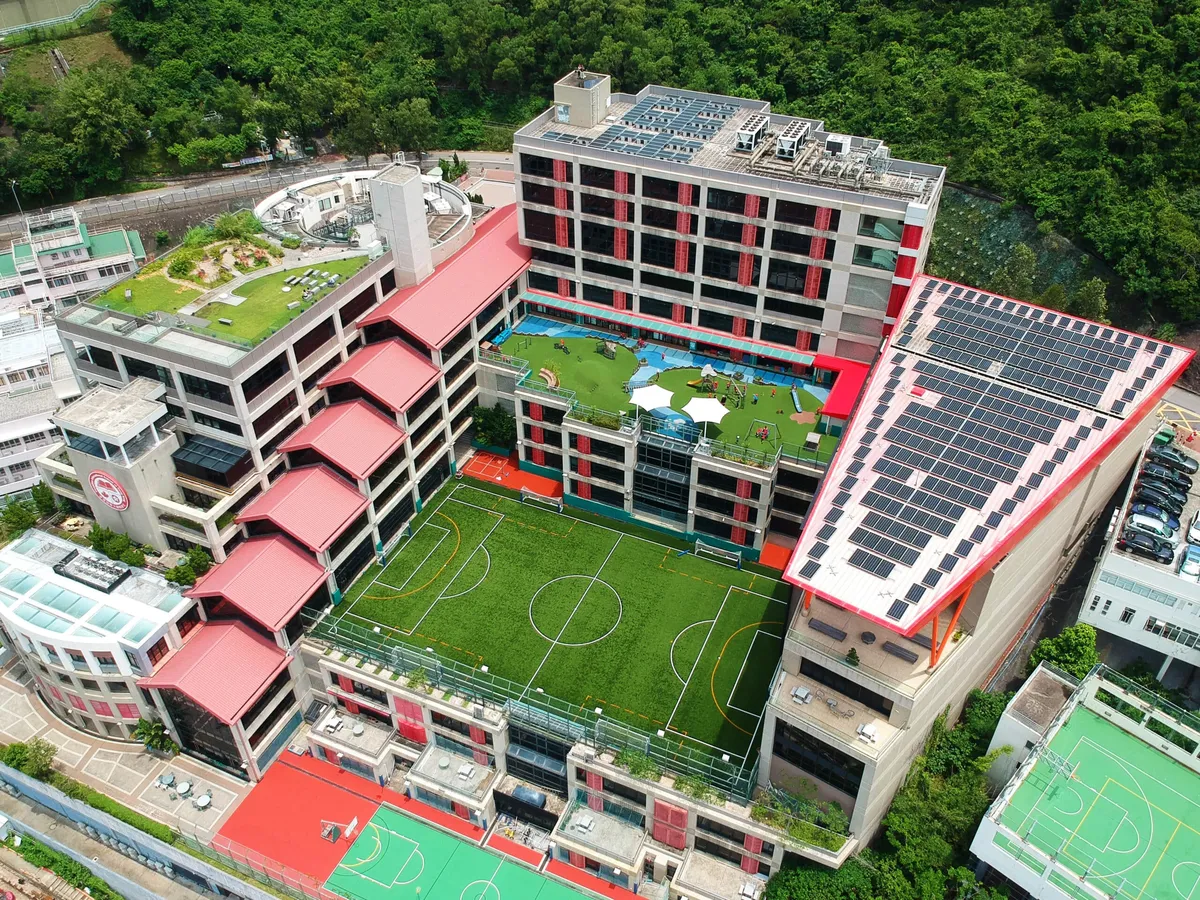
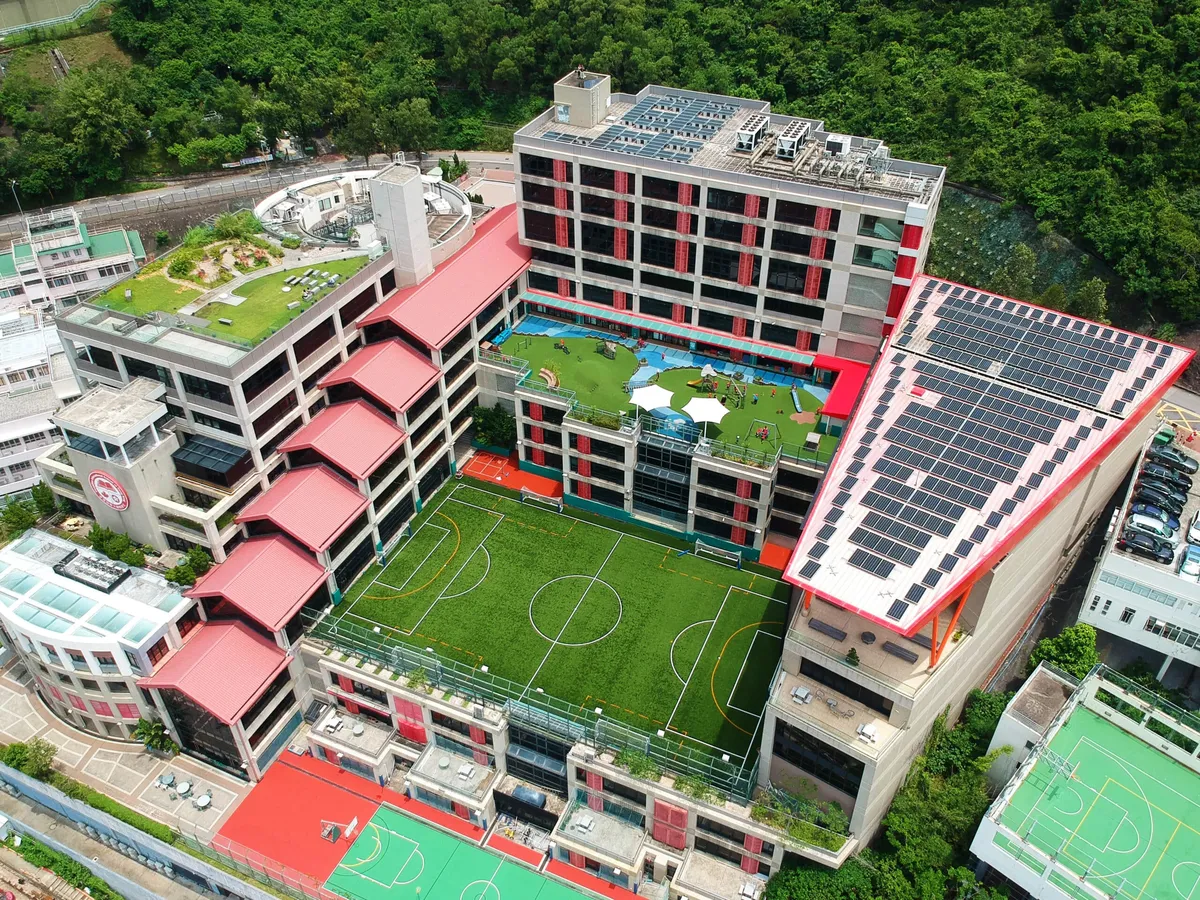
The school has excellent sporting facilities, including two indoor gymnasiums, a weight training and fitness area, a dance studio, a 25-metre swimming pool, an artificial turf field, and several outdoor playing areas.
語言支援
英語母語教師
Yes. All classroom/homeroom teachers are native English or Chinese speakers. Teachers in our French and Spanish Departments are all native French/Spanish speakers or speak French/Spanish at a native level.
為英語非母語學生提供的語言支援
All children who enrol in our school speak English.
學校提供的額外語言課程
CDNIS offers a Bilingual Programme that runs alongside its well-established International Programme. Currently, students in Nursery to Grade 2 are enrolled in the Bilingual Programme, which will be extended by an additional year, reaching Grade 5 by the 2028/2029 academic year.
The International and Bilingual Tracks at Canadian International School of Hong Kong offer our youngest learners the opportunity to grow academically and socially in an intercultural community. Optimizing a child's natural curiosity, our dual-language tracks will help guide your child’s language and cultural fluency in a nurturing but rigorous learning environment.
International Programme
All children in Early Years 1 to Grade 5 study Chinese. Students in Early Years 1 and Early Years 2 enjoy one full day of Mandarin immersion per week. Students in Preparatory to Grade 5 are streamed into differentiated classes and enjoy up to 280 minutes of Mandarin instruction each week. The majority of students in Grades 6, 7 and 8 also study French. Students in Grades 9-12 may study Mandarin, French or Spanish, and in some cases, two languages.
Bilingual Programme
Launched in August 2022, students in the Bilingual Programme are immersed in English one day and Chinese the next. The programme is currently offered to students in Early Years 1 and Early Years 2 and will add a grade level each year right up to Grade 5.
學生支援
為有特殊學習需求學生提供的專職人員/項目
Yes, CDNIS has a Learning Services Team (LST) .
提供的學習支援
Learning Services is a multi-disciplinary team trained in the psycho-social and cognitive development of children and adolescents. Collectively, the LST support the range of individual need in the Lower School, from the youngest to the eldest and the least able to the most able.
The LST are teachers, support staff and school counsellors who work to ensure that all students have opportunities to develop their full potential according to their unique set of strengths and needs.These staff strive to meet the social, emotional and academic needs of children through an integrated service delivery and a focus upon school, home and peer networks.
The model of Learning Services is pro-active and preventative and when necessary, offers a reactionary model of service delivery. The team members have a holistic view of children and believe that the emotional well-being and resilience of children is a fundamental aspect of turning potential into performance. This view underpins the case management style of Learning Services and the collaboration and cooperation between the counselling and academic support team and the homeroom teacher.
學校對天賦異禀和優秀學生的支持
Gifted individuals are those who demonstrate outstanding levels of aptitude or competence in one or more domains. These domains may include intellectual, creative, socioaffective, and/or Sensorimotor. These students require differentiated curriculum, interventions and/or services beyond those normally provided by the regular school programme. CDNIS uses this rationale and definition to identify and challenge gifted and talented students in a way that can also increase opportunities for all students.
學生是否可獲得教育心理師支援
Yes. CDNIS has a full-time Psychologist on staff to serve the needs of all students from Nursery to Grade 12.