Vietnam's capital Hanoi is not the city most expat families think of first when they picture international schooling in Asia. That would be Singapore, or Hong Kong, or maybe Bangkok. But something has been happening in Vietnam's capital over the past decade that's worth paying attention to: a genuine international school market has taken shape — 29 schools, 19 distinct curricula, and fee levels that make parents relocating from the Gulf or East Asia do a double take.
The city itself has a pull that's hard to explain until you've spent a weekend walking around the Old Quarter, eating bun cha on a tiny plastic stool, and watching your children lose their minds over the Hoan Kiem Lake turtle legend. Hanoi is cultured, chaotic, deeply affordable, and increasingly cosmopolitan. The school market reflects all of those qualities. You'll find British heritage brands alongside homegrown bilingual schools, a strong IB corridor, and a handful of American programmes that punch well above their weight.
The catch — and there's always a catch — is that Hanoi's international schools are scattered across a city that's expanding rapidly outward. Your school choice and your housing choice are effectively the same decision, and getting it wrong means a daily commute that will test your marriage. This guide is designed to help you get it right.
Explore all 29 Hanoi international schools to search by curriculum, age group, or fee range.
The curriculum landscape: What's on offer
Hanoi's 29 schools span 19 distinct curricula, but the market breaks down into four broad pathways that account for the vast majority of what families actually choose.
British curriculum
The British system dominates Hanoi's international school market, and the quality at the top end is genuinely impressive. This isn't a market of B-list operators — several UK heritage brands have planted flags here, and they've brought their standards with them.
British International School Hanoi (BIS) is the anchor. With 900 students from 29 nationalities on a purpose-built campus at Vinhomes Riverside in Long Bien, BIS runs the full British pathway from Early Years through IGCSE and into IB. The 50:50 split between local and international students gives it a genuinely mixed community — not always the case in Vietnam, where some "international" schools are 90%+ Vietnamese. FOBISIA membership is the quality signal here. Facilities include a 25-metre indoor pool, full-size sports field, and specialist suites for science, music, and drama. Average class size of 20, capped at 24 in senior years.
Brighton College Vietnam is the newer arrival with serious pedigree — the Vietnam outpost of the UK school that was named England's Independent School of the Decade. Set on a 3.4-hectare campus at Vinhomes Ocean Park in Gia Lam, Brighton offers British and IB pathways for 447 students across 24 nationalities. The campus is purpose-built and impressive: 18 laboratories, a 500-seat theatre, two football fields, a four-season swimming pool, and roughly 60% of learning space outdoors. Average class size of 18. FOBISIA member with scholarships available up to 100% tuition.
Reigate Grammar School Vietnam brings another UK heritage name to Hanoi. Located in Hoang Mai district, Reigate is a not-for-profit school running British and IB pathways (including IB PYP alongside IGCSE and A-Levels) for 450 students from 30+ nationalities. Two indoor swimming pools, a concert hall, and over 50 extracurricular programmes. The not-for-profit model means tuition revenue gets reinvested in the school, not extracted as shareholder returns — a meaningful distinction.
British Vietnamese International School Hanoi (BVIS) is part of Nord Anglia Education, the world's largest premium international school group. With 1,000 students in Thanh Xuan district, BVIS runs a bilingual British-Vietnamese model through IGCSE and A-Levels. The 2025 A-Level results speak for themselves: 47% of grades at A*-A, 100% pass rate. Nord Anglia membership means access to global collaborations with Juilliard (performing arts), MIT (STEAM), and UNICEF. FOBISIA accredited. The student body skews heavily local — a 1:12 international-to-local ratio — so this is a school where your child will be immersed in Vietnamese culture alongside the British curriculum.
International Baccalaureate (IB)
The IB scene in Hanoi is anchored by two heavyweight schools that have been here long enough to have genuine track records, plus several newer entrants that are building credibility.
United Nations International School Hanoi (UNIS) is the standard-bearer. Founded in 1988, it's the longest-established international school in Hanoi. The numbers tell the story: 1,156 students, 63 nationalities, 35 home languages spoken. The nationality mix — 20% Vietnamese, 20% Korean, 15% American, 8% Japanese, 6% Australian — is the most genuinely international in the city. Average class size of just 16, which is exceptional. Located in the Ciputra development in Tay Ho district, the campus features a 400-metre running track, three tennis courts, heated pools, an artificial turf pitch, and a 400-seat theatre. EARCOS accredited. If you want your child in a truly global learning environment, UNIS is the school to beat.
Hanoi International School (HIS) offers the full IB continuum — PYP, MYP, and Diploma — for 276 students from 35 nationalities in Ba Dinh district. Smaller and more intimate than UNIS, with a 65% international student body. The location on Lieu Giai puts it in the heart of the city's diplomatic quarter. EARCOS member. A good choice for families who want the IB philosophy in a community where teachers know every student by name.
Dwight School Hanoi is part of the Dwight Schools network (New York, London, Seoul, Shanghai) and runs IB PYP and MYP from its campus at The Manor Central Park in Hoang Mai. Still small at 165 students, but the facilities are disproportionately impressive: makerspaces ("Spark Labs"), a music conservatory with recording studio, black box theatre, aquatics centre, and learning gardens. Scholarships and financial aid available. This is a school in growth mode — worth watching.
American curriculum
Concordia International School Hanoi is the American flagship. Located in the Van Tri Golf Compound in Dong Anh (north of the city), Concordia runs an American curriculum with Advanced Placement for 557 students from 40+ nationalities. The 1:3 local-to-international ratio makes it one of Hanoi's most internationally diverse schools. Average class size of 18. EARCOS accredited. Facilities include robotics labs, maker spaces, two gymnasiums, a black box theatre, and multiple soccer fields. The northern location means a longer commute from central Hanoi, but families living in the Ciputra or Long Bien corridor will find it accessible.
St. Paul American School Hanoi offers American curriculum with AP for 540 students on a campus in Hoai Duc, west of the city along Thang Long Avenue. Average class sizes of 15 — the smallest on this list — with a maximum of 20. EARCOS member. Founded in 2011, it's now established enough to have a track record. The suburban location on the Splendora compound offers a campus feel that's hard to find in central Hanoi.
The bilingual advantage
Hanoi's bilingual schools deserve more attention than they typically get from incoming expat families. These aren't watered-down compromises — several have invested heavily in facilities and dual-language pedagogy that genuinely integrates Vietnamese and international curricula.
The Olympia Schools in Nam Tu Liem district is the standout: 1,300 students, ACS-WASC accredited (the American gold standard), and the first bilingual school in Vietnam to earn IB World School designation. A Microsoft Showcase School with an NBA-standard gymnasium. The student body is effectively 100% local, so this is a school for families who want their child deeply embedded in Vietnamese society while following an internationally recognised pathway.
Wellspring International Bilingual School in Long Bien's Bo De ward runs British, American, and Vietnamese curricula for 1,200 students on a generous 4.3-hectare campus. Founded in 2011, it's one of the more established bilingual options.
Hanoi Academy International Bilingual School, located in the Ciputra development in Tay Ho, combines the British National Curriculum (through IGCSE and A-Levels) with the Vietnamese national curriculum. Founded in 2009, class sizes average 20 with a cap of 25.
Other pathways worth knowing
- Canadian: Hanoi Toronto School offers the Canadian curriculum for ages 4-18.
- French: Lycee Francais Alexandre Yersin de Hanoi serves francophone families with the full French curriculum through ages 3-18 — a legacy of Vietnam's colonial history that still sustains a genuine community.
- Singaporean: Singapore International School, Ciputra and Singapore International School, Van Phuc blend British and Singaporean approaches, with IGCSE as the secondary pathway.
- Japanese: Japanese International School combines British, Japanese, and Vietnamese curricula — a niche but well-regarded option for families with Japanese connections.
- Korean: Korea Global School Hanoi serves the sizeable Korean expat community with British and Korean curricula.
What you'll actually pay: Fee ranges in Hanoi
Hanoi fees are quoted in Vietnamese dong. The exchange rate that matters: 1 USD is roughly 25,500 VND as of early 2026. A school quoting 400 million VND per year sounds alarming until you realise that's about $15,700 — mid-range by any international standard and dramatically cheaper than comparable schools in Singapore, Hong Kong, or the Gulf.
Compared to Ho Chi Minh City, Hanoi is broadly similar at the premium tier but offers more options in the budget-to-mid range. Compared to Bangkok, it's competitive across the board. Compared to Singapore, it's roughly half the price at every level.
Budget tier: Under 250 million VND/year (under ~$10,000)
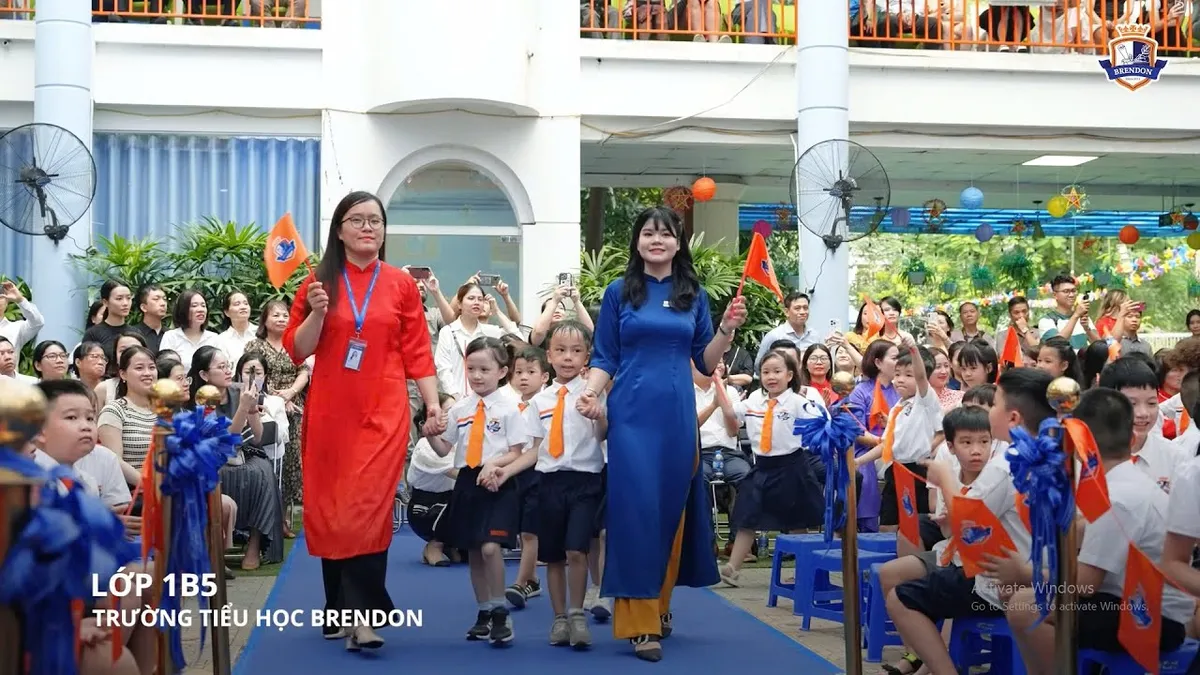
The smaller bilingual schools, newer entrants, and some Vietnamese-curriculum schools with English-medium instruction fall here. Brendon Primary School (British/American/Vietnamese, ages 3-11), Morning Star International School (American/Vietnamese/IB, ages 3-11), and several bilingual options offer internationally oriented education without requiring a corporate relocation package.
At this level, expect smaller campuses, predominantly Vietnamese student bodies, and more limited specialist facilities. But for families who are self-funded, planning to stay long-term, or simply not willing to pay premium prices for a primary-school education, there's genuine value here.
Mid-range: 250–500 million VND/year (~$10,000–$20,000)
This is where Hanoi's market gets interesting, and where it offers the best value relative to other Asian capitals. Schools like TH School (British/IB, 500 students, average class size of 16 in Dong Da district), Reigate Grammar School Vietnam, The Dewey Schools (IB/American/AP, 1,129 students across four campuses), and Wellspring all sit in this bracket.
You get proper accreditations, experienced teaching staff, solid facilities, and a genuine educational programme. TH School's average class size of 16 is remarkable for this price range. The mid-tier in Hanoi often delivers what the premium tier delivers in pricier markets — minus the brand name.
Premium: 500–850 million VND/year (~$20,000–$33,000)
United Nations International School Hanoi, British International School Hanoi, Brighton College Vietnam, and Concordia International School Hanoi occupy this space. These are the schools that corporately-relocated diplomats and multinational employees gravitate toward — the broadest international student mix, the most extensive facilities, the strongest accreditations, and the kind of co-curricular programmes (sports, arts, service learning) that justify the premium.
The important context: Hanoi's premium tier would be mid-range in Singapore and solidly budget-to-mid in Hong Kong. If your company calibrated your education allowance for those markets, you'll find yourself with options here that weren't on the table elsewhere.
Schools to put on your shortlist
Here are ten schools that represent the genuine breadth of what Hanoi offers — from IB powerhouses to British heritage brands to bilingual innovators.
United Nations International School Hanoi (UNIS)
Full IB (PYP, MYP, Diploma) | Ages 3-18 | 1,156 students | 63 nationalities The most internationally diverse school in Hanoi, and it's not close. Founded in 1988, UNIS has the longest track record and the most genuinely global student body — no single nationality dominates. Average class size of 16 is the tightest on this list. The Ciputra campus in Tay Ho has the facilities to match: heated pools, 400-metre track, three tennis courts, a 400-seat theatre. EARCOS accredited. If diversity and IB rigour are your priorities, this is your school.
British International School Hanoi (BIS)
British, IB, IGCSE | Ages 2-18 | 900 students | 29 nationalities The British curriculum anchor in Hanoi. The Vinhomes Riverside campus in Long Bien is purpose-built and well-equipped — 25-metre indoor pool, full sports field, specialist suites across the sciences and arts. The 50:50 local-to-international ratio strikes a balance that's hard to find. FOBISIA member. Spanish, French, Korean, and Vietnamese as additional languages. Class sizes average 20.
Brighton College Vietnam
British, IB | Ages 3-18 | 447 students | 24 nationalities The newest premium entrant, trading on one of the UK's most respected school brands. The 3.4-hectare campus at Vinhomes Ocean Park is stunning — 60% outdoor learning space, 18 labs, 500-seat theatre, four-season pool. Still building its student body, which means smaller classes and more personal attention right now. FOBISIA member. Scholarships up to 100%.
Concordia International School Hanoi
American, AP | Ages 4-18 | 557 students | 40+ nationalities The American curriculum standard-bearer. The Van Tri campus north of the city offers space and facilities — robotics labs, maker spaces, two gymnasiums — that central Hanoi schools can't match. The 1:3 local-to-international ratio means your child will be in a genuinely diverse classroom. EARCOS accredited. Average class size of 18.
Reigate Grammar School Vietnam
British, IB, IGCSE, A-Levels | Ages 3-18 | 450 students | 30+ nationalities A not-for-profit school with UK heritage, offering both British and IB pathways. The Hoang Mai campus has two indoor pools, a concert hall, and 50+ extracurricular options. FOBISIA member. The not-for-profit structure means every dong of tuition goes back into the school. Class sizes capped at 16 for nursery and 24 for older years.
British Vietnamese International School Hanoi (BVIS)
British, IGCSE, A-Levels | Ages 2-18 | 1,000 students Nord Anglia's Hanoi campus, running a genuine bilingual British-Vietnamese model. The A-Level results — 47% at A*-A in 2025 — demonstrate that bilingual doesn't mean diluted. FOBISIA member. Nord Anglia's global collaborations (Juilliard, MIT, UNICEF) add programming that standalone schools can't replicate. Based in Thanh Xuan district.
TH School
British, IB, IGCSE, A-Levels | Ages 2-18 | 500 students | 22 nationalities An independent school in Dong Da district running a college-preparatory programme with both British and IB pathways. Average class sizes of 16, which is premium-tier intimacy at what appears to be a mid-range price point. Technology integration is thoughtful — iPads in primary, BYOD in secondary. The central location on Chua Boc puts it closer to the Old Quarter than most international schools. Scholarships available.
The Dewey Schools
IB, American, AP | Ages 5-18 | 1,129 students | 35 nationalities A fast-growing Vietnamese-owned group operating four campuses across Hanoi and Hai Phong. The main campus at Starlake Urban Area in Bac Tu Liem is modern and well-equipped — swimming pool, gymnasium, makerspace, soccer field. The dual IB-American track with AP gives students flexibility. Scholarships and financial aid available. One to watch as it scales.
Dwight School Hanoi
IB (PYP, MYP) | Ages 3-17 | 165 students Part of the global Dwight Schools network (New York, London, Seoul). Still small, but the campus at The Manor Central Park is built for growth — and the facilities (music conservatory, recording studio, Spark Labs, aquatics centre, learning gardens) are already more extensive than schools three times its size. Scholarships available. A school for families who want the IB philosophy in an intimate, design-forward environment.
The Olympia Schools
IB, American, Vietnamese | Ages 6-18 | 1,300 students The bilingual powerhouse. First bilingual school in Vietnam to earn IB World School status, plus ACS-WASC accreditation from the US — a rare dual recognition. The NBA-standard gymnasium and 3,000m2 outdoor playground signal serious investment. Microsoft Showcase School. The student body is essentially all Vietnamese, so this is the choice for families who want their children embedded in Vietnamese culture with internationally recognised qualifications.
Districts: Where to live for the school run
Hanoi's geography is the variable that most incoming families underestimate. The city has expanded dramatically outward over the past decade, and the international schools have followed — scattered across districts that can be 20+ kilometres apart. Traffic is dense, and while it's not as chaotic as HCMC (fewer motorbikes, wider roads in the new districts), a poor school-to-home match will cost you an hour each way during peak times.
Tay Ho (West Lake)
The traditional expat heartland. UNIS Hanoi and Hanoi Academy are both in or near the Ciputra development on the western side of West Lake. Singapore International School Ciputra is here too. Tay Ho has the highest concentration of international restaurants, cafes, and English-language services in the city. Housing options range from lakeside villas to modern apartments in Ciputra and the surrounding developments. The trade-off: it's a bubble. Families who want to experience "real Hanoi" may find Tay Ho a little too comfortable.
Long Bien
East of the Red River, Long Bien is where BIS Hanoi sits (at Vinhomes Riverside) alongside Wellspring. The district has modernised rapidly — Vinhomes Riverside is a sprawling gated community with its own amenities — but it retains a more Vietnamese character than Tay Ho. Housing is more affordable, and the new developments offer modern apartments with river views. The bridge crossings into central Hanoi can add time during rush hour, but for families whose school is in Long Bien, there's no reason to commute across the river daily.
Gia Lam and eastern developments
Brighton College Vietnam is out at Vinhomes Ocean Park in Gia Lam — a massive new township east of the city. This is Hanoi's frontier: brand-new infrastructure, modern housing, and prices well below central districts. The campus is purpose-built and impressive. The trade-off is distance: Gia Lam is a solid 20-25 kilometres from the Old Quarter. Families choosing Brighton should plan to live in or near the Ocean Park development. The upside is space, affordability, and a campus environment that central Hanoi schools simply can't offer.
Cau Giay, Dong Da, and Ba Dinh
These central-west districts are home to several schools including Hanoi International School (Ba Dinh), TH School (Dong Da), and Westlink International School (Bac Tu Liem, bordering Cau Giay). Housing in these districts puts you close to the heart of the city — the Old Quarter, Hoan Kiem Lake, the French Quarter — with a more authentically Vietnamese neighbourhood feel. Commutes to central schools are short. The compromise is that campuses tend to be more compact than those in the outer districts.
Ha Dong and the southwest
The International School @ ParkCity Hanoi is the anchor school in this fast-developing southwestern district. Founded in 2019, ISPH runs British curriculum through IGCSE and A-Levels on a modern campus with an Olympic-sized pool, astro turf, and a reported 80% international student body. ParkCity Hanoi is a master-planned community that's attracting young families. Housing is significantly more affordable than Tay Ho or central districts.
Hoang Mai
Reigate Grammar School Vietnam and Dwight School Hanoi are both in Hoang Mai, south-southeast of the city centre. This is an emerging district for international education — The Manor Central Park (Dwight's home) and the Dai Kim urban area (Reigate) are both modern developments. Housing is mid-priced and the district is well-connected by Hanoi's expanding metro system.
Admissions: Timing, assessments, and what to expect
When to apply
Hanoi's international schools almost universally accept rolling admissions, which is good news for families arriving mid-year. That said, "rolling" is more generous at some schools than others. UNIS and BIS can have waiting lists at popular year groups — particularly Early Years and the start of secondary (Year 7 / Grade 6). Apply 6-12 months ahead for these schools if you're targeting a specific entry point.
The mid-range and bilingual schools are generally more accommodating. Most will accept students at any point during the academic year if seats are available, and 2-3 months of lead time is typically sufficient.
Brighton College is a partial exception — they primarily accept at the start of the academic year (August) and spring term (January), with mid-year entry considered case by case.
Entrance assessments
The pattern across Hanoi:
- Early Years (ages 2-5): Play-based observation or a short interaction session. BIS runs informal assessments; UNIS evaluates developmental readiness.
- Primary (ages 5-11): English and maths assessments, plus references from the previous school. Most schools use their own assessments, though some (like Westlink) use standardised tools like GL CAT4 and MAP testing.
- Secondary (ages 11-18): English proficiency is the gatekeeper. Expect cognitive ability tests, subject assessments in maths and English, and interviews. Schools with A-Level or IB Diploma entry (BIS, Reigate, BVIS) may have more rigorous entry requirements for Years 12-13.
English language support
Most Hanoi international schools offer EAL (English as an Additional Language) support, which matters in a market where many students come from Korean, Japanese, or Vietnamese language backgrounds. UNIS has dedicated learning support. BVIS integrates bilingual instruction by design. Brighton College offers free EAL support. Concordia has dedicated EAL specialists at the elementary level.
Ask specific questions: How many EAL teachers relative to student population? Is support in-class or pull-out? What's the typical timeline for a non-English-speaking student to reach mainstream proficiency? The answers reveal more than marketing materials ever will.
The Vietnamese curriculum requirement
Vietnam requires all schools — including international ones — to include Vietnamese language and culture in their programmes. Most international schools satisfy this through dedicated Vietnamese language classes. The bilingual schools (BVIS, Wellspring, Olympia, Hanoi Academy) integrate it more deeply into the core programme. This requirement isn't a burden: if your family is going to live in Vietnam, your children learning Vietnamese is a straightforward advantage.
Making your decision
Twenty-nine schools is manageable, especially once you filter by curriculum preference, district, and budget. The honest truth about Hanoi's market is that it's maturing quickly but hasn't yet reached the saturation of Bangkok or HCMC. That means less redundancy — there isn't a school for every niche — but it also means less noise. The schools that are here have had to earn their place, and the overall quality floor is higher than you might expect from a market this size.
Start with the Hanoi page on Scholae to filter by what matters to your family. Once you've narrowed to four or five schools, use the compare tool to see them side by side — fees, class sizes, curricula, accreditations, and student demographics in a single view.
Then visit. Walk the corridors during a regular school day, not during an open day presentation. Talk to other parents at pickup. Watch how teachers engage with students who are struggling, not just the confident ones. And if you can, spend a weekend in the district where the school is located — eat at the local restaurants, walk to the nearest park, sit in the traffic at 8 AM on a Monday. That commute is going to be your daily life, and in Hanoi, getting the geography right matters as much as getting the school right.