La capital de Argentina, Buenos Aires, no debería funcionar tan bien para la educación internacional. Un país con inflación de tres dígitos, crisis monetarias periódicas y un coste de vida que oscila salvajemente dependiendo del tipo de cambio que uses — y sin embargo aquí están 42 colegios internacionales, muchos con más de un siglo de historia, formando graduados del Diploma IB y niños bilingües que se mueven con naturalidad entre el español y el inglés. El secreto es sencillo: la tradición de los colegios británicos en Argentina es más profunda que en casi cualquier lugar fuera del propio Reino Unido, y Buenos Aires ha superpuesto programas IB, franceses, alemanes, italianos y americanos sobre esa base de época victoriana.
El resultado es una ciudad donde se puede obtener una educación genuinamente de talla mundial por una fracción de lo que se pagaría en Singapur, Dubái o Londres. Donde un colegio fundado en 1838 por colonos escoceses convive con un moderno IB World School que enseña mandarín. Buenos Aires es caótica, hermosa, exasperante y culturalmente rica de maneras que los centros de expatriados esterilizados no pueden replicar, y sus colegios reflejan exactamente ese carácter.
Explora los 42 colegios internacionales de Buenos Aires en Scholae para filtrar por plan de estudios, rango de cuotas y grupo de edad.
El Panorama Curricular: Raíces Británicas, Ambición IB
El mercado de colegios internacionales de Buenos Aires es diferente al de cualquier otra ciudad de América Latina. Mientras que la mayoría de las capitales tienen un puñado de opciones internacionales construidas para diplomáticos y ejecutivos expatriados, BA tiene todo un ecosistema de colegios angloargentinos bilingües que se remonta a mediados del siglo XIX: instituciones fundadas por inmigrantes escoceses, ingleses e irlandeses que se convirtieron en residentes permanentes y querían que sus hijos se educaran en inglés sin abandonar Argentina.
De los 42 colegios internacionales, 21 ofrecen currículo británico, 26 siguen el programa nacional argentino (a menudo en combinación) y 24 ofrecen IB. La superposición es la clave: la mayoría de los colegios de BA no ofrecen un único currículo de forma aislada. Combinan, y llevan generaciones haciéndolo.
Currículo Británico
La tradición británica es la columna vertebral. Colegios como St. Andrew's Scots School (fundado en 1838), Belgrano Day School (1912), St. Hilda's College (1912) y St George's College (1898) no son colegios de expatriados en ningún sentido convencional: son instituciones argentinas con ADN pedagógico británico, frecuentadas por familias porteñas durante generaciones. Tu hijo no estará en una burbuja internacional.
St. Hilda's College en Hurlingham es la vía Cambridge más pura: IGCSE y A-Levels, enseñanza en inglés y español, de 3 a 18 años. Si quieres el sistema de exámenes británico sin el marco filosófico más amplio del IB, St. Hilda's lo ofrece en un entorno suburbano con permanencia institucional real — fundado el mismo año que el BDS, en 1912.
Belgrano Day School — 1.200 alumnos en Juramento, en el corazón de Belgrano — ofrece currículo británico, argentino e IB bajo un mismo techo, con una reputación de resultados académicos y deporte competitivo inusualmente sólida para los estándares de BA. Los grupos de 25 alumnos son algo amplios, pero la amplitud de opciones curriculares y la ubicación compensan. Barker College y Florence Nightingale School completan el grupo británico con alternativas más pequeñas e íntimas, ambas ofreciendo la doble vía británica-argentina que define a los colegios anglos de BA.
Bachillerato Internacional
Veinticuatro colegios ofrecen IB, lo que convierte a BA en uno de los mercados IB más densos de América del Sur. Pero hay que leer la letra pequeña: muchos ofrecen solo el Programa del Diploma incorporado a una base británica o argentina. Los colegios con el continuum IB completo son más escasos.
Washington School, fundado en 1950 en la Avenida Federico Lacroze, es la oferta IB más completa de la ciudad: IB PYP, IGCSE y el Diploma completo, junto con el currículo argentino. Doce nacionalidades, mandarín como idioma adicional, servicio de autobús escolar y almuerzos incluidos. La jornada escolar va de las 8 a las 15 h con atención supervisada antes y después del horario escolar — detalles prácticos que importan cuando ambos padres trabajan.
St. Andrew's Scots School superpone el currículo británico e IB sobre el sistema argentino para 1.900 alumnos en Olivos. Fundado por colonos escoceses en 1838 — no es un error tipográfico: precede a la mayor parte del Buenos Aires que conocemos hoy —, St. Andrew's combina profundidad institucional con el rigor moderno del IB. IGCSE y Diploma IB, becas y ayuda financiera disponibles. Los plazos de admisión del 1 de junio y el 15 de agosto reflejan un colegio que gestiona cuidadosamente la demanda.
Northlands School, con 1.848 alumnos en Nordelta, combina el currículo británico, el IB PYP y el IGCSE con enseñanza trilingüe en inglés, francés y español. El campus de Nordelta significa instalaciones contemporáneas en una comunidad suburbana planificada, muy diferente de los colegios tradicionales del centro de la ciudad, pero con la masa crítica para sostener un programa amplio.
Más Allá del Mundo Anglosajón
La herencia inmigrante de Buenos Aires se refleja de manera hermosa en sus colegios. Lycée Franco-Argentin Jean Mermoz, fundado en 1960 en Ramsay en Belgrano, atiende a la comunidad francesa con enseñanza trilingüe (inglés, francés, español) y una tasa de aprobados en el Bachillerato Francés del 97% en 2024, por encima de la media de la red AEFE. Las cuotas de primaria rondan los 9.742.368 ARS anuales (aproximadamente 8.000-9.000 USD), lo que lo convierte en uno de los pocos colegios de BA con precios publicados de forma transparente.
Goethe Schule en Boulogne, fundado en 1897 con respaldo del gobierno alemán, imparte el Abitur Internacional en grupos de 20, de 2 a 18 años. El Abitur abre las puertas a las universidades alemanas y europeas sin exámenes de acceso adicionales. Scuola Italiana Cristoforo Colombo refleja la masiva población ítalo-argentina de BA con enseñanza trilingüe en inglés, español e italiano. En una ciudad donde los apellidos italianos superan en número a los españoles, esto no es exótico: es un regreso cultural.
Buenos Aires International Christian Academy (BAICA) en San Fernando ofrece algo diferente: un doble currículo americano-argentino con base cristiana, impartido por profesores expatriados. Con 200 alumnos y grupos de 15, es la opción internacional más íntima de la ciudad. Las admisiones continuas permiten incorporarse a mitad de año.
Cuotas: La Ventaja de Buenos Aires
Aquí es donde Buenos Aires se vuelve genuinamente atractiva. Las cuotas de los colegios internacionales son una fracción de lo que cobran instituciones equivalentes en Asia, Oriente Medio o Europa.
Argentina cotiza la mayoría de las cuotas en pesos argentinos (ARS), y el valor del peso frente al dólar cambia constantemente. A principios de 2026, los tipos oficiales y paralelos han convergido bajo las reformas económicas, pero confirma qué tipo usa tu colegio. Algunos colegios cotizan directamente en USD para familias internacionales. Lycée Franco-Argentin Jean Mermoz publica las cuotas de primaria en 9.742.368 ARS/año, aproximadamente 8.000-9.000 USD a los tipos actuales.
Nivel económico (3.000-6.000 USD/año): Colegios bilingües de currículo argentino y opciones IB más pequeñas. Educación sólida que costaría tres a cinco veces más en otros lugares. Islands International School y Southern International School ocupan este espacio.
Nivel medio (6.000-12.000 USD/año): El punto óptimo. Colegios angloargentinos consolidados como Belgrano Day School, St George's College North, Florence Nightingale School y Villa Devoto School. Grupos de 18-25 alumnos, vías de exámenes IB o británicos, décadas de redes de exalumnos. Un colegio que cobra 10.000 USD aquí cobraría 25.000-35.000 USD en Singapur por un programa comparable.
Nivel premium (12.000-20.000 USD/año): St. Andrew's Scots School, Northlands School, Lincoln School. Grupos más pequeños, comunidades internacionales más sólidas, prestigio institucional. Incluso en la cima, Buenos Aires sigue siendo más barato que el nivel medio de la mayoría de las capitales asiáticas y europeas.
Costes ocultos: Transporte en autobús (500-1.500 USD/año), uniformes en la mayoría de los colegios de tradición británica, cuotas de inscripción a los exámenes de IGCSE/A-Levels/IB (500-1.000 USD en años de exámenes). Presupuesta un 10-15% por encima de la matrícula publicada.
Diez Colegios que Merecen una Mirada Más Detenida
No es un ranking: el mejor colegio es el que encaja con tu familia.
St. Andrew's Scots School
Británico, IB, IGCSE | 1.900 alumnos | De 3 a 18 años | Olivos
La gran institución histórica. Fundada en 1838, casi dos siglos de actividad ininterrumpida. Becas y ayuda financiera disponibles, algo inusual en BA. Plazos de admisión: 1 de junio para la entrada en agosto, 15 de agosto para febrero de 2027. El referente de la profundidad institucional.
Northlands School
Británico, IB PYP, IGCSE | 1.848 alumnos | De 1 a 18 años | Nordelta
El otro gigante de BA. Trilingüe (inglés, francés, español) en un moderno campus en Nordelta. Grupos de 24 alumnos. El componente francés es un elemento diferenciador. Para las familias en los suburbios del norte, esta es la institución de referencia.
Belgrano Day School
Británico, Argentino, IB | 1.200 alumnos | De 2 a 18 años | Belgrano
Justo en Juramento, en el corazón de Belgrano. Fundado en 1912. Excelencia académica más deporte competitivo, 1.200 alumnos, grupos de 25. El colegio con el que se miden las demás familias de Belgrano.
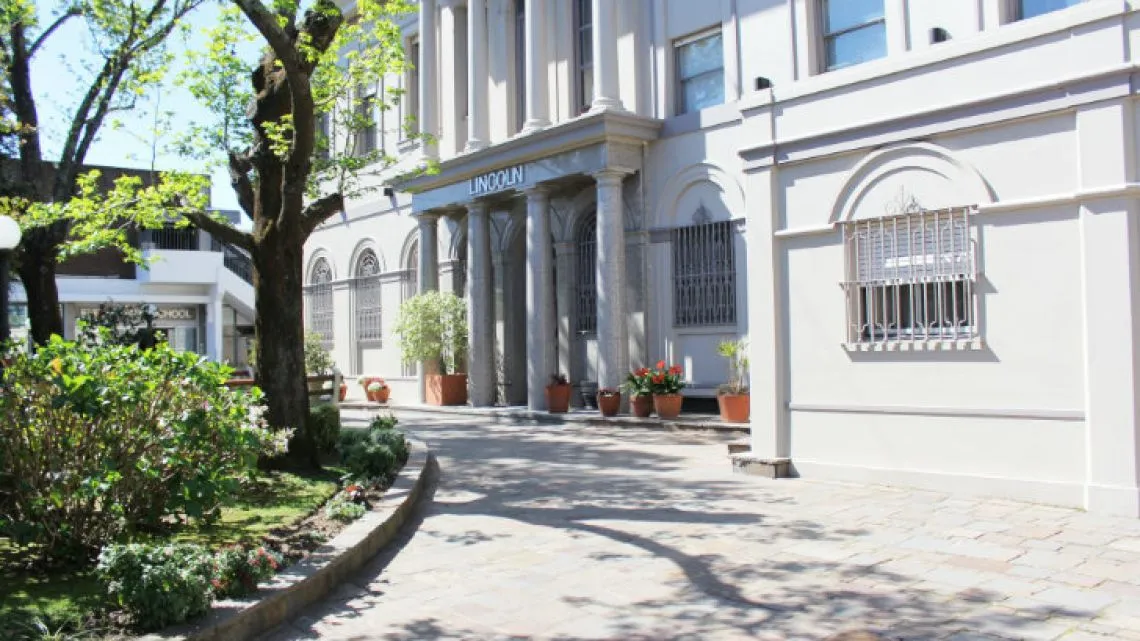
Lincoln School
IB, Americano, Argentino | 616 alumnos | De 3 a 18 años | La Lucila
La opción americana. Grupos de 18, comunidad de tamaño mediano, con vocación de servicio. La mejor opción para las familias provenientes del sistema americano que quieren continuidad con acceso al IB.
St George's College Quilmes
Británico, IB, Argentino | 890 alumnos | De 3 a 18 años | Quilmes
Uno de los tres campus de St George's (también en el centro y en Los Polvorines). Fundado en 1898, grupos de 18, admisiones continuas. Atiende a los suburbios del sur con educación británica-IB de excelente valor.
Washington School
IB, Argentino, IGCSE, IB PYP | De 2 a 18 años | Belgrano
La oferta IB más completa del centro de BA. Fundado en 1950. Mandarín junto con inglés y español. Servicio de autobús, almuerzos, atención antes y después del horario escolar. Amplitud curricular que los colegios IB más nuevos no pueden igualar.
St. Catherine's Moorlands School
IB, Montessori | 1.000 alumnos | De 1 a 18 años | Belgrano
El único itinerario Montessori-IB en Buenos Aires. Grupos de 20 alumnos en Carbajal, en Belgrano. Se requiere examen de entrada. Si crees en el enfoque Montessori y quieres que conduzca a una titulación internacionalmente reconocida, esta es tu única opción.
Goethe Schule
Argentino, Alemán, Abitur | De 2 a 18 años | Boulogne
Fundado en 1897, respaldado por el gobierno alemán, trilingüe (inglés, español, alemán), grupos de 20. El Abitur Internacional abre puertas en universidades europeas. Primera visita indispensable para las familias germanohablantes.
Lycée Franco-Argentin Jean Mermoz
Francés, Argentino | De 3 a 18 años | Belgrano
Cuotas publicadas (9.742.368 ARS primaria, aprox. 8.000-9.000 USD). Tasa de aprobados en el Bachillerato Francés del 97%. Trilingüe en inglés, francés y español. El colegio del mundo francófono en BA.
St. Hilda's College
Británico, A-Levels, IGCSE | De 3 a 18 años | Hurlingham
La vía Cambridge más pura de Buenos Aires. IGCSE y A-Levels, fundado en 1912. El carácter de suburbio inglés de Hurlingham — clubes de criquet y campos de rugby— hace que parezca más Surrey que Sudamérica. Para las familias que quieren el sistema de exámenes británico sin el IB, sin más.
Barrios: Donde Vives lo Es Todo
Buenos Aires se extiende a lo largo del Río de la Plata durante casi 100 kilómetros. Elige tu barrio teniendo en cuenta el desplazamiento al colegio.
Belgrano — El destino habitual para la mayoría de las familias expatriadas. BDS, Washington, St. Catherine's, Mermoz, Colombo e Islands están todos aquí. Con arbolado, a pie, buenos restaurantes, la línea D del Subte hacia el centro. Alquileres de 800-1.800 USD/mes.
Palermo — Adyacente a Belgrano, ambiente más moderno. No hay colegios directamente, pero los de Belgrano están a 10-15 minutos. La mejor cultura de cafeterías de América del Sur. Alquileres de 1.000-2.000 USD/mes.
Olivos / Vicente López — Corredor suburbano al norte junto al río. Territorio de St. Andrew's. Más tranquilo, más verde, comunidad expatriada consolidada. Tren Mitre a Retiro en 25 minutos. Alquileres de 700-1.500 USD/mes.
Nordelta — Urbanización suburbana privada, a 35 km del centro de BA. Campus de Northlands. Moderno, seguro, espacioso, pero no Buenos Aires en ningún sentido cultural. Las familias cuya vida gira en torno al colegio la adoran.
Quilmes / Sur — St George's Quilmes sirve al sur. Barrio obrero, auténtico, alquileres más baratos en el área metropolitana de BA (400-800 USD/mes). Educación IB-británica de verdad en un barrio sin artificios.
Hurlingham / Oeste — St. Hilda's y St Paul's Hurlingham. Carácter distintivamente inglés construido por ingenieros ferroviarios británicos en el siglo XIX: clubes de criquet, campos de rugby. Verde y asequible (500-1.000 USD/mes), a 45 minutos del centro de BA.
Admisiones: Qué Esperar
Los colegios argentinos siguen el calendario del hemisferio sur: de febrero a diciembre. Esto toma por sorpresa a las familias del hemisferio norte. La mayoría de los colegios internacionales de BA aceptan admisiones continuas para llegadas a mitad de año, pero los ingresos en primaria (4-5 años) y en el Diploma IB (16 años) se llenan más rápido. Solicita con tres a seis meses de antelación en St. Andrew's, Northlands y BDS.
St. Andrew's publica plazos específicos: 1 de junio para agosto, 15 de agosto para febrero de 2027. St George's College utiliza un proceso de cuatro pasos con entrevistas para padres y alumnos. St. Catherine's Moorlands requiere exámenes de entrada con plazos en julio (K-1.° grado) y octubre (2.°-12.° grado).
La mayoría de los colegios enseñan en inglés y español y esperan fluidez funcional en al menos uno de los dos. Lincoln School y BAICA son especialmente acogedores para los recién llegados que dominan el inglés. Inicia el proceso de residencia argentina (DNI o precaria) con antelación: los colegios serán flexibles contigo, pero el papeleo lleva más tiempo del esperado.
La Decisión
Buenos Aires ofrece algo que casi ningún otro mercado puede igualar: profundidad institucional a precios del mundo en desarrollo. Un colegio fundado en 1838 que cobra menos que una guardería londinense. Programas IB a una quinta parte del coste de Singapur. Graduados trilingües que cambian de código entre inglés y español con tanta naturalidad que es invisible.
La advertencia honesta: la inestabilidad económica argentina es real. Las cuotas en pesos pueden dispararse. Algunos colegios aplazan el mantenimiento en años difíciles. Pero las instituciones perduran: han sobrevivido a dictaduras militares, hiperinflación e impagos de deuda. Esa resiliencia vale algo.
Visita tres colegios, no doce. Empieza por el currículo (¿exámenes británicos? ¿IB completo? ¿americano?), reduce por geografía (Belgrano por comodidad, zona norte por espacio, Nordelta por modernidad) y visita en un día escolar normal. Escucha el patio de recreo: en Buenos Aires, los cambios de código te dicen todo sobre si el bilingüismo es real o performativo.
Explora los 42 colegios de Buenos Aires en Scholae para filtrar por currículo, cuotas y grupo de edad. Utiliza la herramienta de comparación para poner tu lista reducida lado a lado.
Buena suerte con la mudanza. A tus hijos les va a encantar aquí.