India's financial capital Mumbai is a city that runs on intensity. The traffic, the monsoons, the pace of business, the street food at midnight — everything here operates at a higher frequency. School admissions are no exception. With 35 international schools tracked on Scholae, this is India's deepest market for globally recognised education, and competition for seats at the top institutions is fierce enough to make Hong Kong parents nod in sympathy.
But here's the thing about Mumbai's school landscape: it's not just deep, it's genuinely varied. You'll find full IB continuum schools alongside British IGCSE programmes, American-curriculum options, and hybrid models that blend international frameworks with India's respected ICSE and ISC boards. For expat families arriving on corporate assignments and Indian families planning for university abroad, the choices are real — and the quality across the spectrum is higher than most people expect.
This guide pulls from real school data on Scholae to help you make sense of it all: what's actually available, what it costs (understanding international school fees), and which neighbourhoods put you closest to the school gate.
Explore all 35 Mumbai international schools to filter by curriculum, age group, and more.
The curriculum landscape
Mumbai's international schools cluster overwhelmingly around the International Baccalaureate, but dig deeper and you'll find meaningful variety.
International Baccalaureate (IB)
The IB dominates Mumbai's market. The majority of the city's 35 international schools offer some form of IB programme, and several run the full continuum — PYP (primary), MYP (middle years), and the Diploma Programme.
Oberoi International School is perhaps the purest expression of the IB in Mumbai. With 1,617 students across two campuses and over 30 nationalities, it offers PYP, MYP, the Diploma, and the Career-related Programme (CP) — a less common track that's valuable for students who want a more applied pathway.
American School of Bombay runs IB PYP and MYP from Pre-K through Grade 12, serving ages 2 to 18. ASB has the feel of a well-resourced American international school operating within an IB framework — a combination that appeals to US expat families.
Ascend International School, founded in 2012, offers all three IB programmes with an emphasis on blending "international mindedness alongside Indian values and traditions." Other strong IB options include Edubridge International School, a CIS-accredited IB World School in South Mumbai; B.D. Somani International School; Aditya Birla World Academy; and Bombay International School.
British curriculum, IGCSE, and A-Levels
DSB International School is Mumbai's only COBIS-accredited British international school, with 416 students from 25+ nationalities, offering British, IGCSE, and IB pathways with instruction in English, French, and German. Over 65 years of history and a trilingual model make it a genuine standout.
Don Bosco International School, founded in 1928, offers IB, A-Levels, IGCSE, and IB PYP for ages 3 to 18. Podar International School IB in Santacruz, founded in 1927, has ranked among India's top 10 international day schools for 10 consecutive years, offering IB, A-Levels, and IGCSE.
JBCN International School, Borivali takes a different approach entirely — A-Levels, IGCSE, and ICSE (rather than IB) for 778 students, using its own "EduCreative" methodology. Worth investigating if you want something outside the IB mainstream.
Multi-curriculum schools
The Cathedral & John Connon School is the grand institution of Mumbai education — founded in 1860, 8,000 students, offering five distinct pathways: IB Diploma, AP, IGCSE, ICSE, and ISC. Few schools anywhere in the world match that breadth.
Dhirubhai Ambani International School, founded in 2003 with 1,170 students, offers American, ICSE, IGCSE, and IB Diploma programmes. DAIS is the school most associated with Mumbai's business elite.
Jamnabai Narsee International School, established in 1970, offers IB and IGCSE for ages 5 to 18. Singapore International School Mumbai rounds out the multi-curriculum options with IB, IGCSE, and IB PYP on an 8-acre campus for 500 students.
What you'll actually pay
Mumbai's fees are high by Indian standards but well below Singapore, Hong Kong, or the Middle East.
INR 3,00,000–6,00,000/year (USD 3,500–7,000)
Newer IB schools and suburban options in Navi Mumbai and Borivali. Schools like Goldcrest International offer international education at genuinely accessible fees. Campuses tend to be more modest and the student body more local, but the IB curriculum is the same everywhere.
INR 6,00,000–12,00,000/year (USD 7,000–14,000)
Where most expat families land. Ascend International School, Podar International School IB, JBCN International School Borivali, and Singapore International School Mumbai fall here. Established programmes, reasonable class sizes, genuine extracurricular offerings. The quality-to-cost ratio is arguably better than anywhere else in Asia's major expat cities.
INR 12,00,000–20,00,000/year (USD 14,000–24,000)
Mumbai's most established institutions: Dhirubhai Ambani International School, Oberoi International School, American School of Bombay, and DSB International School. Purpose-built campuses, international faculty, strong university placement records.
INR 20,00,000+/year (USD 24,000+)
The Cathedral & John Connon School and Aditya Birla World Academy for their international tracks. At this level you're paying for institutional legacy, exceptional university counselling, and alumni networks that extend deep into India's business establishment.
Note: Many schools charge additional fees for registration, development, transport, meals, and activities that can add 15-25% to headline tuition. Always ask for total cost of attendance.
Schools to put on your shortlist
Here are 10 schools that represent what Mumbai offers. This isn't a ranking — it's a starting point.
Dhirubhai Ambani International School
American, ICSE, IGCSE, IB Diploma | Ages 5–18 | 1,170 students | Founded 2003 Located near BKC and associated with one of India's most prominent business families, the multi-curriculum model means students can pursue American, ICSE, IGCSE, or IB pathways — a level of flexibility that few schools anywhere can match. The relatively small student body keeps things personal.
Oberoi International School
Full IB Continuum (PYP, MYP, DP, CP) | Ages 3–18 | 1,617 students | 30+ nationalities India's leading IB continuum school across two campuses, including the rare Career-related Programme. Growth from founding in 2008 to 1,600+ students speaks to demand for premium IB education in Mumbai.
American School of Bombay
IB PYP, IB MYP | Ages 2–18 | Independent day school | Powai area The school most American expat families gravitate toward. Combines the feel of a US independent school with IB programme structure, Pre-K through Grade 12.
The Cathedral & John Connon School
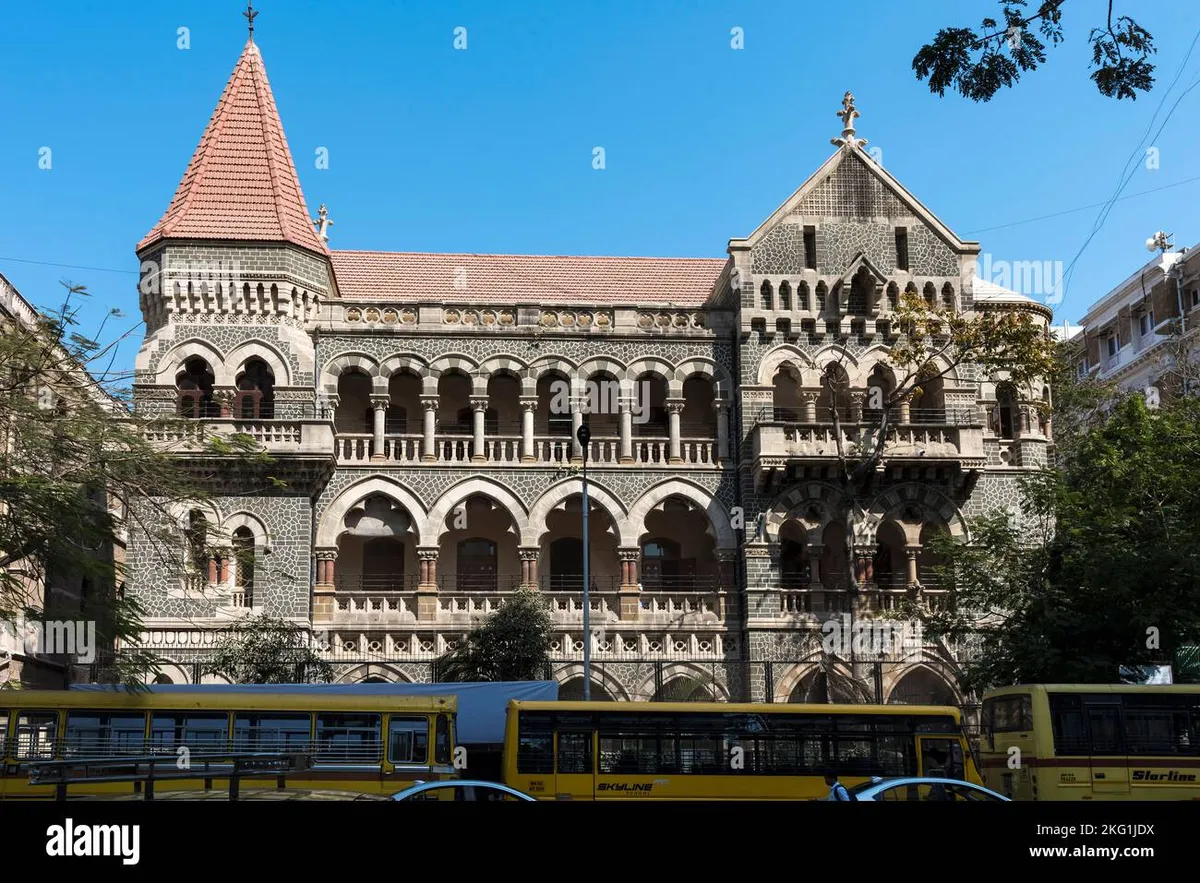
IB, AP, IGCSE, ICSE, ISC | Ages 2–18 | 8,000 students | Founded 1860 Five curriculum pathways under one roof in a heritage building in Fort, South Mumbai. The alumni network is a who's who of Indian business, law, and the arts.
DSB International School
British, IGCSE, IB | Ages 3–18 | 416 students | 25+ nationalities | COBIS-accredited Mumbai's only COBIS-accredited British school, with trilingual instruction in English, French, and German. Intimate, genuinely international community in Breach Candy, South Mumbai.
Don Bosco International School
IB, A-Levels, IGCSE, IB PYP | Ages 3–18 | Founded 1928 Nearly a century of heritage in the Matunga area of central Mumbai, with the warmth and values-driven culture that Don Bosco schools are known for worldwide. The combination of IB and A-Levels gives senior students genuine curriculum choice.
Podar International School IB
IB, A-Levels, IGCSE | Ages 5–18 | Founded 1927 | Santacruz Ranked among India's top 10 international day schools for 10 consecutive years. Three curriculum tracks — IB, A-Levels, and IGCSE — covering every major international university admissions pathway. Located in Santacruz with easy access from both Bandra and Andheri.
Edubridge International School
Full IB (PYP, MYP, DP) | Ages 2–18 | CIS Member | South Mumbai CIS-accredited IB World School — a meaningful quality marker requiring genuine institutional self-study. The obvious choice for South Mumbai families wanting a full IB programme.
JBCN International School, Borivali
A-Levels, IGCSE, ICSE | Ages 2–18 | 778 students | Borivali Deliberately non-IB, offering A-Levels and IGCSE alongside the Indian ICSE board. The "EduCreative" methodology and northern-suburb location make it a genuine alternative.
Singapore International School Mumbai
IB, IGCSE, IB PYP | Ages 5–18 | 500 students | 8-acre campus Singaporean educational ethos — rigour, discipline, structured learning — on an impressive 8-acre campus. Large enough for community, small enough that nobody gets lost.
Neighbourhoods: Where to live for the school run
Mumbai's geography is a long, narrow peninsula with suburbs stretching north and across the harbour to Navi Mumbai. Traffic is legendarily difficult — choose your neighbourhood based on your school, not the other way around.
South Mumbai (Fort, Breach Candy, Colaba, Malabar Hill) — Cathedral, DSB, and Edubridge are here. Heritage apartments, sea views, walkable streets, and the highest rents in India. Buildings may lack modern amenities, but families who choose South Mumbai tend to love it intensely — the character is unlike anywhere else in the city.
Bandra and Juhu — Mumbai's most popular expat area. Jamnabai Narsee is in Juhu. Excellent restaurants, lively cultural scene, the Bandra-Worli Sea Link to South Mumbai. Housing ranges from sea-facing apartments on Carter Road to affordable options inland.
Santacruz and Andheri — The middle ground. Podar International is in Santacruz. More space, lower rents than Bandra, good railway connectivity, and access to both airports.
Powai and Hiranandani — Mumbai's tech hub, home to IIT Bombay and a growing cluster of corporate offices. American School of Bombay and Ascend International draw families here. Hiranandani Gardens offers modern housing and planned infrastructure that feels closer to Singapore than the island city. The trade-off is connectivity — getting from Powai to South Mumbai during peak hours is an exercise in patience.
BKC — Mumbai's business district. DAIS is the anchor school. Premium high-rise housing, modern infrastructure, short commute for corporate expats.
Navi Mumbai (Nerul, New Panvel, Kharghar) — Across the harbour, a planned city with dramatically more space, cleaner air, and lower costs. D Y Patil International, Nerul, Dr. Pillai Global Academy, New Panvel, and Goldcrest International serve this area. The upcoming Navi Mumbai International Airport will transform connectivity. Families who choose Navi Mumbai generally do so for quality of life — the housing is genuinely affordable by Mumbai standards.
Borivali and the Northern Suburbs — JBCN Borivali and NES International. Proximity to Sanjay Gandhi National Park — actual green space in Mumbai, which is remarkable — and the most affordable housing in the city. The metro expansion is gradually closing the distance gap to central Mumbai.
Admissions tips
Start early. For Cathedral, DAIS, Oberoi, and ASB, begin 12 to 18 months before your intended start date. Mid-tier schools need 3 to 6 months.
Expect assessments. Early years get play-based observation; primary involves reading and maths assessments plus references; secondary means cognitive aptitude tests and English proficiency evaluations.
Gather documents. Indian regulations require extensive paperwork: birth certificates, previous school records, transfer certificates, passport copies, proof of address. International families should have records attested or apostilled. Start early — bureaucratic delays are a Mumbai reality.
Ask about EAL. Most schools offer English as an Additional Language support, but depth varies. Ask specifically about dedicated EAL teachers, pull-out vs. in-class support, and the typical timeline for mainstream transition.
Budget for extras. Registration, development, security deposits, transport, meals, and activities can add 15-25% beyond headline tuition.
Consider the monsoon. June through September brings heavy rains that can close schools and double commute times. Living closer to school matters more in Mumbai than in most cities.
Academic calendar. Most Mumbai schools follow the Indian year (June to April), not the Northern Hemisphere September start. If transferring from Europe or North America, plan for the calendar gap.
Finding the right fit
Thirty-five schools is a manageable number to research, but every school visit in Mumbai involves navigating traffic that tests your commitment.
Start with the Mumbai city page on Scholae to filter by curriculum, age range, and other criteria. Once you've got a shortlist of four or five, use the compare tool to see them side by side — curricula, student demographics, accreditations, and key details in a single view.
Mumbai is not the easiest city for a school search. But the quality of international education here has improved dramatically over the past decade, the fee-to-quality ratio is better than most major Asian cities, and the cultural richness of growing up in Mumbai is an education in itself. The right school is out there — and it's probably closer to your apartment than you think, assuming the traffic cooperates.